Our founder, Daniel Krull, began his career in international agricultural development as a Peace Corps volunteer in Guinea, West Africa, in 2013. What he saw both surprised and shocked him.
Unfortunately, his assignment in the Koundara region of Guinea was cut short by the Ebola epidemic in 2014. He made a promise to his village to return, not just for a visit, but to actually do something concrete to improve the lives of his new found friends.

Dan and his new Guinean friends at his first Peace Corps village.
Over the course of the next few years, Dan aimed to further understand the challenges of sustainable agriculture in third world environments. He pursued two assignments with USAID’s John Ogonowski and Doug Bereuter Farmer-to-Farmer Program in Haiti to assist Makouti Agro Enterprise with improving goat husbandry practices. In 2017, he worked with Trees for the Future and the Peace Corps Response program in Senegal, West Africa. This year-long assignment saw him facilitating the implementation of the forest garden model and teaching soil improvement techniques to over 200 village farmers.
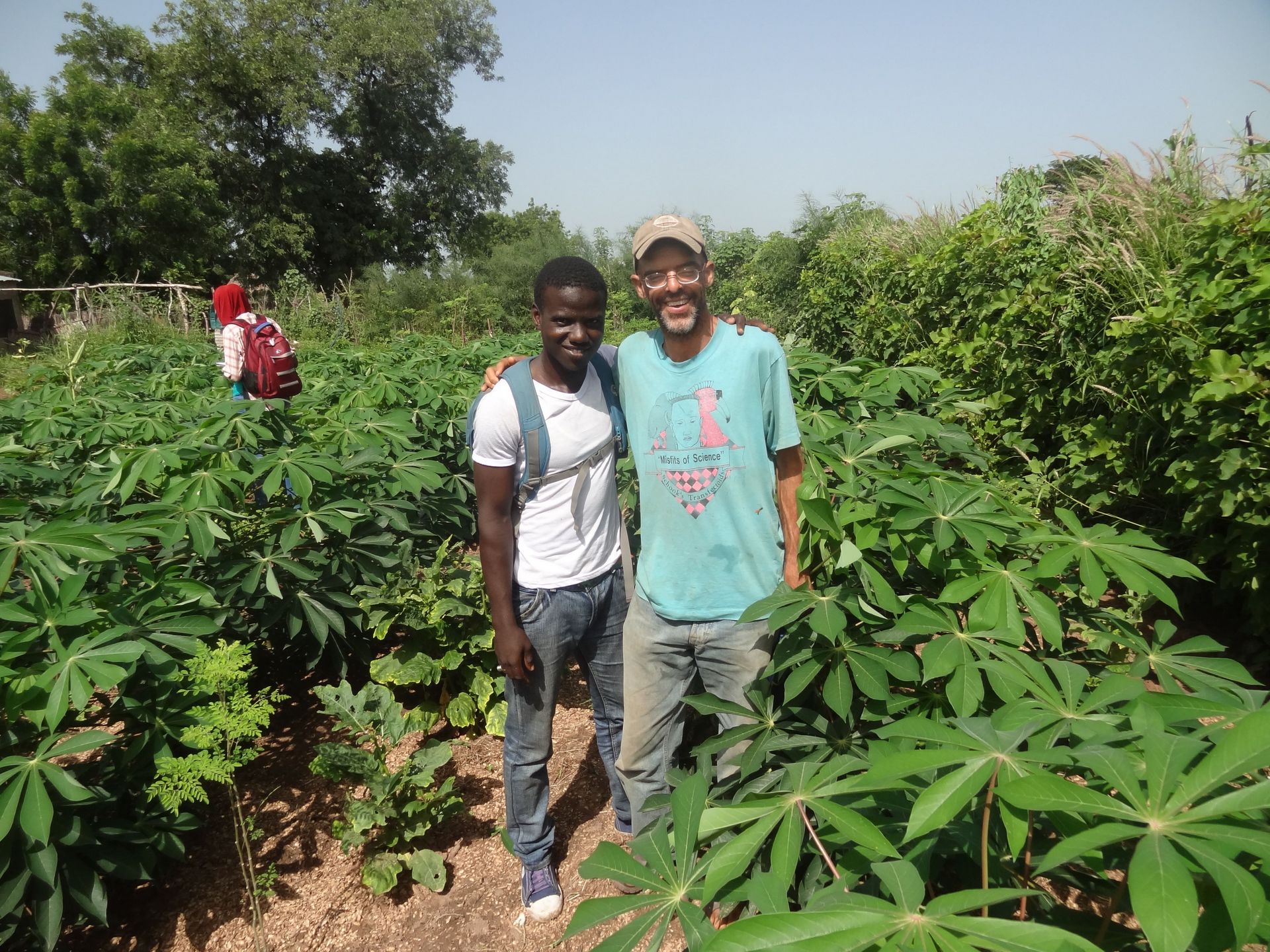
Dan with Boubacar Ndau, a participating farmer in Senegal
Upon returning from Senegal and reflecting on his experiences over the last few years, he could not help but be drawn back to his life in Guinea, where despite the widespread abject poverty, he saw so much potential. When he talked to colleagues and friends, many recommended that he hook up with an existing non-profit.
However, finding a non-profit with operations in Guinea was difficult. There are just not that many non-profits operating in Guinea to begin with.
Many of the popular, and very large non-profits that you may contribute to, do not have current operations in Guinea:
It was then that he realized:
Guinea is being forgotten.
This was not okay. No one deserves to be forgotten!
So, Dan spent the next few years organizing his many pages of notes and designing a project that would exponentially improve the lives of the Guinean peasant farmer. He emphatically eschews GMOs, a heavy reliance on advanced machinery, and many of the Green Revolution’s conventional techniques such as synthetic insecticides and herbicides, in favor of more accessible approaches that are sustainable in the long term.